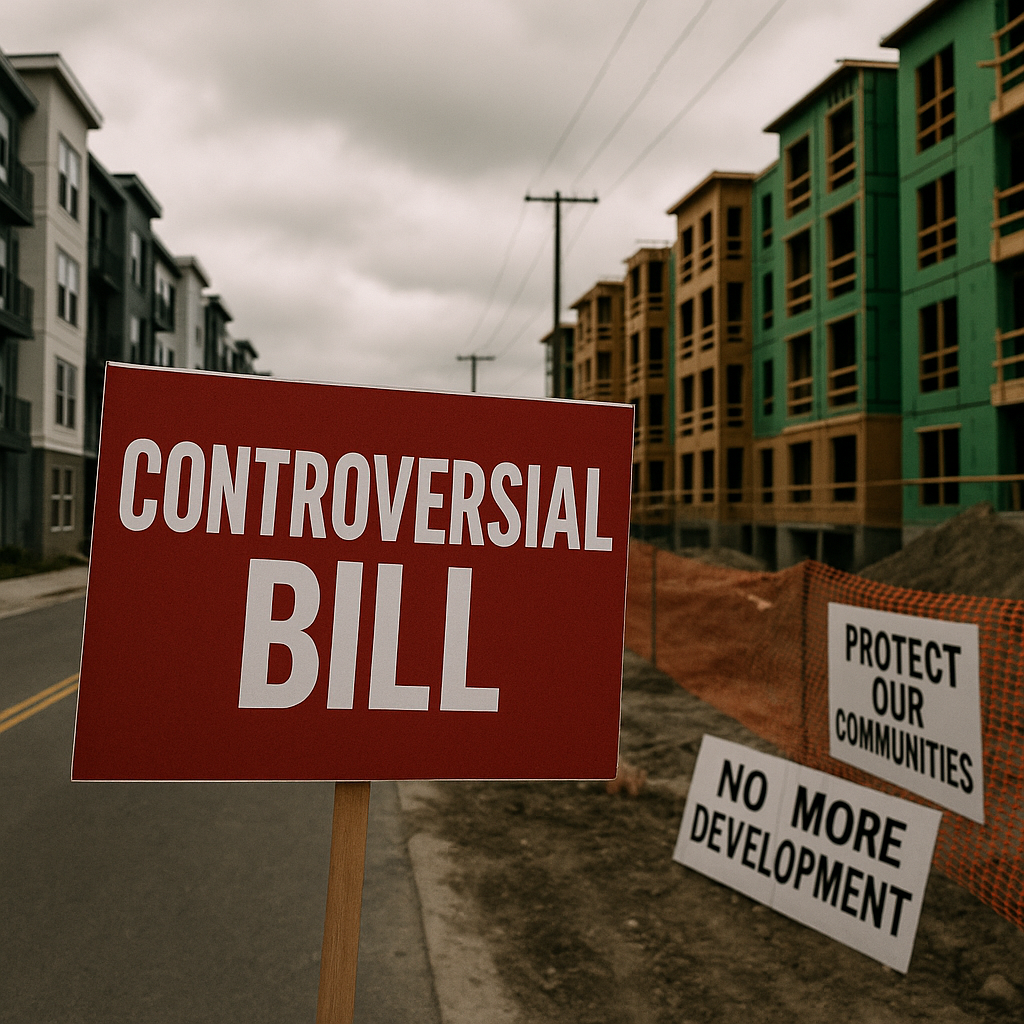
As California grapples with its ongoing challenges related to housing, transportation, and climate change, a new piece of legislation has emerged as a focal point of public discourse. Spearheaded by a trio of influential legislators—McNerney, Bryan, and Elhawary—this bill promises to reshape the landscape of development in the state, but not without igniting a heated debate among stakeholders.
The intent behind the legislation is commendable: to streamline the approval process for sustainable housing projects while addressing the pressing need for affordable living options. California is in the grip of a housing crisis, with skyrocketing rents and home prices pushing many residents to the brink of financial ruin. The authors of the bill argue that by expediting the construction of eco-friendly developments, the state can make significant strides toward alleviating housing shortages while also meeting its ambitious climate goals.
However, the bill’s potential impact has drawn sharp criticism from various corners. Environmentalists, local community groups, and some policymakers have expressed concerns that the fast-tracking provisions could lead to hasty decisions that overlook vital environmental assessments. Critics argue that while the need for affordable housing is undeniable, it should not come at the expense of sustainable practices or community input. The fear is that in the rush to meet housing demands, developers might cut corners, leading to projects that are not only inadequate in terms of sustainability but also detrimental to local ecosystems.
Furthermore, there is a palpable tension between proponents and opponents regarding the balance of power in urban development. Many community members feel that the bill undermines local control and decision-making, stripping away the ability of municipalities to shape their own growth and development trajectories. This sentiment has resonated particularly in affluent neighborhoods, where residents fear that an influx of new housing could disrupt their communities and reduce property values. For these residents, the bill represents not just a shift in policy but a fundamental alteration of the social fabric of their neighborhoods.
Public response has been mixed, reflecting the complex and often contradictory nature of California’s housing crisis. On one hand, many working-class families and advocates for economic justice have rallied behind the bill, heralding it as a necessary step toward a more equitable housing ecosystem. They argue that the status quo has failed to serve the most vulnerable populations, who are often left in the lurch as rents continue to climb. Advocates see this legislation as a lifeline, offering a pathway to secure affordable housing options in a state where such opportunities are increasingly scarce.
On the other hand, the backlash from various community organizations and environmental groups cannot be understated. Petitions have circulated, urging the Governor to veto the bill, citing the need for more comprehensive planning and environmental safeguards. They argue that the current housing crisis cannot be solved through quick-fix solutions that prioritize development over community well-being and ecological integrity.
As the bill awaits a decision from the Governor, the stakes have never been higher. Its passage could signal a transformative moment in California’s approach to housing, setting a precedent for how the state balances the urgent need for affordable living with the equally pressing need for environmental sustainability. Conversely, a veto could reinforce the notion that developers must tread carefully in a state where community voices and environmental concerns are of paramount importance.
Ultimately, the question remains: Can California find a way to reconcile its housing needs with its environmental responsibilities? The authors of the bill, McNerney, Bryan, and Elhawary, have put forth a bold vision, but it is now up to the Governor and the public to determine whether that vision aligns with the values and priorities of the state. It is a moment of reckoning, one that could define the future of housing and development in California for years to come. As debates unfold and voices are raised, one thing is clear: the conversation around this bill is not just about housing; it is about the kind of California we want to build for the generations to come.
Bill Details
- Bill Number: SB 7
- State: CA
- Status: Status not available
- Last Action: In Senate. Consideration of Governor’s veto pending.
- Author(s)/Sponsor(s): McNerney, Bryan, Elhawary
- Read Full Bill Text
